

October 23, 2026
My Baby Has a Cold. Can We Still Vaccinate?
मैद्याचे नूडल्स की बाजरी, ज्वारी किंवा नाचणीपासून बनवलेले नूडल्स: तुमच्या कुटुंबाने हा बदल करायला हवा का?
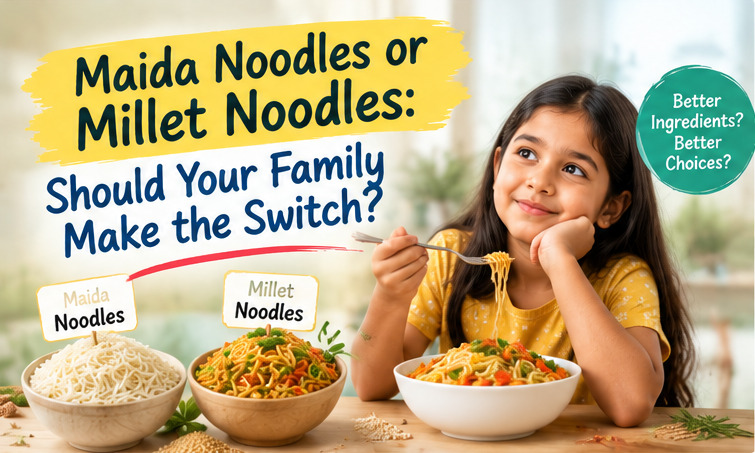
Yes—swapping maida noodles for a well-chosen millet version can improve the nutritional quality of your family’s meal. But “millet” on the packet is not a health certificate. The advantage depends on how much millet is actually present, whether it is whole grain, and what else has joined the party. Whole-grain millets can provide more fibre and certain minerals than refined cereals; a heavily processed noodle with a token sprinkling of millet may offer little improvement. My advice? Consider the switch, certainly. Just let the back of the packet—not the cheerful farming scene on the front—make the final decision.
होय—मैद्याच्या नूडल्सऐवजी चांगल्या प्रतीच्या बाजरीच्या नूडल्स वापरल्याने तुमच्या कुटुंबाच्या जेवणाची पौष्टिक गुणवत्ता सुधारू शकते. पण पॅकेटवरील "बाजरी" हे काही आरोग्याचे प्रमाणपत्र नाही. त्याचा फायदा त्यात प्रत्यक्षात किती बाजरी आहे, ती अख्खी आहे की नाही आणि त्यात आणखी काय मिसळले आहे यावर अवलंबून असतो. प्रक्रिया केलेल्या धान्यांपेक्षा अख्ख्या बाजरीतून अधिक फायबर आणि काही खनिजे मिळू शकतात; तर केवळ नावापुरती बाजरी असलेल्या जास्त प्रक्रिया केलेल्या नूडल्समुळे फारसा फरक पडणार नाही. माझा सल्ला? हा बदल नक्कीच विचारात घ्या. फक्त पॅकेटच्या पुढच्या बाजूला असलेल्या शेतीच्या सुंदर दृश्याला नव्हे, तर मागच्या बाजूला असलेल्या माहितीला अंतिम निर्णय घेऊ द्या.
What changes when the flour changes?
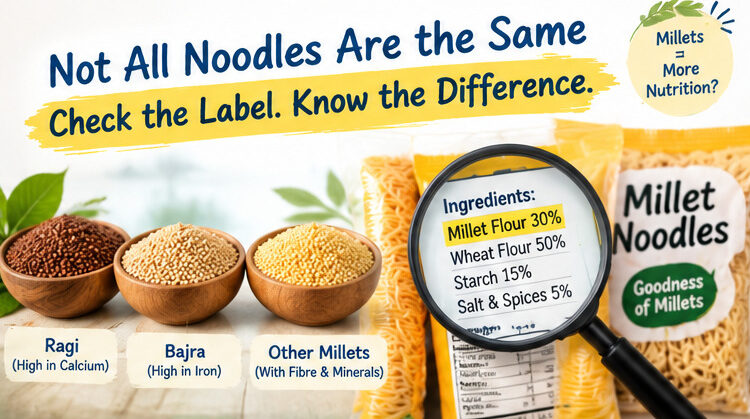
Maida is refined wheat flour; whole-grain millet flour retains more of the grain’s fibre-rich outer layers. That difference can matter for bowel regularity and fullness after eating. Millets also bring different nutritional strengths: ragi, or finger millet, is particularly rich in calcium, while bajra, or pearl millet, supplies iron and other minerals. But these are grain characteristics, not guaranteed noodle values. Dilution with maida or starch changes the picture. Nor does millet automatically mean more protein: some millets have protein levels comparable to wheat, while finger millet contains less. “Different grain” is not shorthand for “better at absolutely everything.”
पिठाचा प्रकार बदलल्यास काय फरक पडतो?

मैदा म्हणजे शुद्ध केलेले गव्हाचे पीठ; तर संपूर्ण धान्यापासून बनवलेल्या बाजरी किंवा नाचणीच्या पिठात धान्याचे बाहेरील फायबरयुक्त (तंतुमय) थर अधिक प्रमाणात टिकून राहतात. हा फरक पचनक्रियेवर आणि जेवणानंतर पोट भरल्याच्या जाणिवेवर परिणाम करू शकतो. विविध तृणधान्यांचे पोषणमूल्यांच्या दृष्टीनेही वेगळे फायदे असतात: नाचणीमध्ये कॅल्शियम भरपूर असते, तर बाजरीमध्ये लोह आणि इतर खनिजे मिळतात. मात्र, हे गुणधर्म मूळ धान्याचे आहेत, त्यापासून बनवलेल्या नूडल्सचे नाहीत. जर त्यात मैदा किंवा स्टार्च मिसळले, तर परिस्थिती बदलते. तसेच, तृणधान्य म्हणजे त्यात अधिक प्रथिने (प्रोटिन) असतीलच असे नाही; काही तृणधान्यांमधील प्रथिनांचे प्रमाण गव्हाच्या बरोबरीचे असते, तर नाचणीमध्ये गव्हापेक्षा कमी प्रथिने असतात. थोडक्यात, 'वेगळे धान्य' म्हणजे 'प्रत्येक बाबतीत अधिक चांगले' असा अर्थ होत नाही.
What does the science actually show?
There is promising evidence, including research on noodles themselves. In one study, noodles containing 30% finger millet flour had a glycaemic index of approximately 45, compared with approximately 63 for the refined-wheat control. GI describes how quickly a carbohydrate-containing food raises blood glucose under standard testing conditions. A larger systematic review covering 65 studies also found favourable blood-glucose findings for millet-based foods, although results varied with the millet and preparation. Encouraging? Yes. Permission to label every millet noodle “diabetes-friendly”? No. One tested recipe cannot speak for an entire supermarket shelf, and these findings do not establish long-term benefits in children.
That distinction matters because a packet can borrow the reputation of its raw ingredients without delivering their full nutritional advantage. Millet noodles may supply more fibre and minerals, and some formulations may produce a gentler blood-glucose response. Those are worthwhile potential benefits—not promises of weight loss, stronger immunity or treatment for anaemia. Mineral content also differs from mineral absorption: compounds such as phytates can reduce the availability of iron and other minerals. For parents, the sensible goal is dietary variety and a better overall meal, not expecting a bowl of noodles to perform the work of an entire balanced diet.
विज्ञान प्रत्यक्षात काय दर्शवते?

याबाबत आश्वासक पुरावे आहेत, ज्यात खुद्द नूडल्सवरील संशोधनाचाही समावेश आहे. एका अभ्यासात, ३०% नाचणीचे पीठ असलेल्या नूडल्सचा ग्लायसेमिक इंडेक्स (GI) अंदाजे ४५ होता, तर शुद्ध केलेल्या गव्हाच्या नूडल्सचा ग्लायसेमिक इंडेक्स अंदाजे ६३ होता. GI हे दर्शवते की, कर्बोदके असलेला पदार्थ प्रमाणित चाचणी परिस्थितीत रक्तातील ग्लुकोजची पातळी किती वेगाने वाढवतो. ६५ अभ्यासांचा समावेश असलेल्या एका मोठ्या पद्धतशीर पुनरावलोकनातही बाजरीवर आधारित पदार्थांसाठी रक्तातील ग्लुकोजच्या पातळीबाबत अनुकूल निष्कर्ष आढळले, जरी हे निष्कर्ष बाजरीच्या प्रकारानुसार आणि बनवण्याच्या पद्धतीनुसार वेगवेगळे होते. हे उत्साहवर्धक आहे का? होय. प्रत्येक बाजरीच्या नूडलला “मधुमेहासाठी अनुकूल” असे लेबल लावण्याची परवानगी आहे का? नाही. एक तपासलेली पाककृती संपूर्ण सुपरमार्केटमधील शेल्फचे प्रतिनिधित्व करू शकत नाही आणि हे निष्कर्ष मुलांमध्ये दीर्घकालीन फायदे सिद्ध करत नाहीत.

हा फरक महत्त्वाचा आहे कारण एखादे पॅकेट त्याच्या कच्च्या घटकांची प्रतिष्ठा वापरू शकते, परंतु त्यांचे संपूर्ण पौष्टिक फायदे देऊ शकत नाही. बाजरीच्या नूडल्समधून अधिक फायबर आणि खनिजे मिळू शकतात आणि काही प्रकारांमुळे रक्तातील ग्लुकोजच्या पातळीवर सौम्य परिणाम होऊ शकतो. हे संभाव्य फायदे मोलाचे आहेत—वजन कमी करणे, रोगप्रतिकारशक्ती वाढवणे किंवा ॲनिमियावर उपचार करणे यांसारखी आश्वासने नाहीत. खनिजांचे प्रमाण आणि त्यांचे शोषण यातही फरक असतो: फायटेट्ससारखी संयुगे लोह आणि इतर खनिजांची उपलब्धता कमी करू शकतात. पालकांसाठी, आहारातील विविधता आणि एकंदरीत उत्तम जेवण हे शहाणपणाचे ध्येय आहे; केवळ नूडल्सच्या वाटीने संपूर्ण संतुलित आहाराचे काम करावे अशी अपेक्षा करणे योग्य नाही.
Turn the packet over before buying
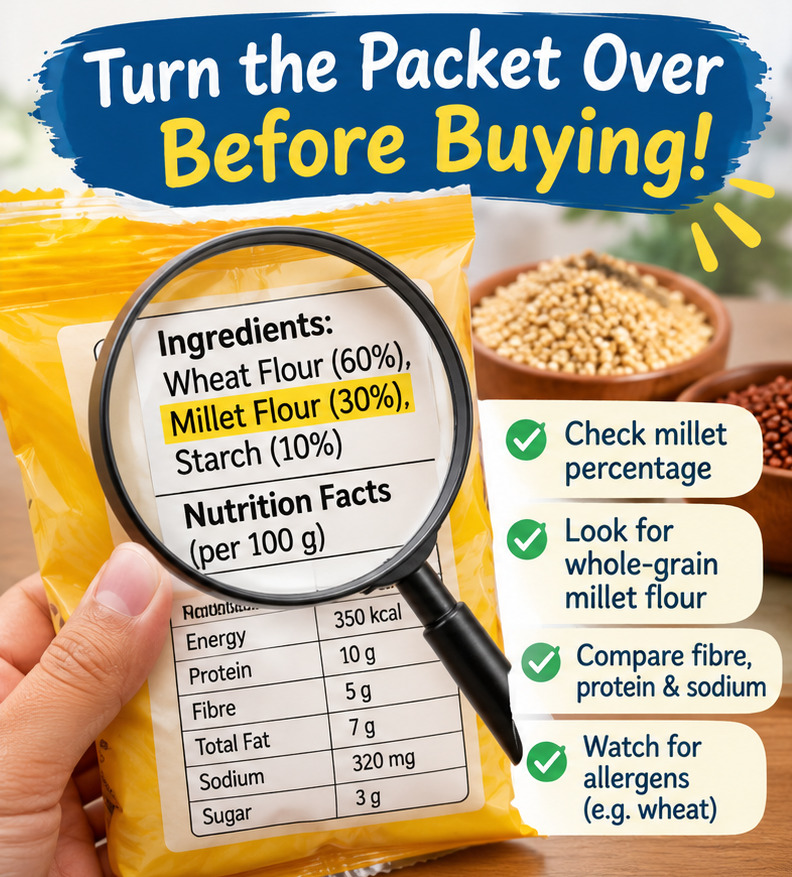
Start with the ingredients. Indian labelling rules require them to appear in descending order of weight, so the first ingredient deserves your attention. Check the declared millet percentage; ingredients emphasised through words or pictures generally require a percentage declaration, subject to specified exceptions. If refined wheat flour leads the list, you are buying a wheat-led blend—not necessarily a bad product, but not the dramatic makeover the front suggests. Look for whole-grain millet flour where available. And inspect the allergen statement: millet itself is gluten-free, but millet noodles containing wheat are not suitable for someone who needs to avoid gluten.
Next, compare equivalent quantities—preferably per 100 grams of dry product—not one packet’s tiny serving against another’s generous bowl. Check fibre where declared, protein, sodium, saturated fat and added sugar. Read whether the figures include the seasoning sachet, and remember that the label’s adult reference percentages are not a child’s daily allowance. A millet claim cannot cancel out the sodium or fat numbers. Choose the product with meaningful nutritional advantages, then serve it thoughtfully: vegetables plus beans, tofu, paneer or egg can turn noodles into a more varied meal. The better swap is not merely maida to millet; it is marketing-led shopping to informed eating.
खरेदी करण्यापूर्वी पॅकेट उलटून पाहा.

घटकांपासून सुरुवात करा. भारतीय लेबलिंग नियमांनुसार, ते वजनाच्या उतरत्या क्रमाने दिसणे आवश्यक आहे, त्यामुळे पहिल्या घटकाकडे तुमचे लक्ष असणे महत्त्वाचे आहे. घोषित केलेली बाजरीची टक्केवारी तपासा; शब्दांनी किंवा चित्रांनी अधोरेखित केलेल्या घटकांसाठी, काही विशिष्ट अपवाद वगळता, सामान्यतः टक्केवारी घोषित करणे आवश्यक असते. जर यादीत रिफाइन्ड गव्हाचे पीठ अग्रस्थानी असेल, तर तुम्ही गव्हाचे प्रमाण जास्त असलेले मिश्रण खरेदी करत आहात—हे उत्पादन वाईटच असेल असे नाही, पण पॅकेटच्या मुखपृष्ठावर सुचवल्याप्रमाणे त्यात लक्षणीय बदल झालेला नसतो. जिथे उपलब्ध असेल तिथे अख्ख्या बाजरीचे पीठ शोधा. आणि ऍलर्जीकारक घटकांविषयीची माहिती तपासा: बाजरी स्वतः ग्लूटेन-मुक्त असते, परंतु गहू असलेल्या बाजरीच्या शेवया ग्लूटेन टाळण्याची गरज असलेल्या व्यक्तीसाठी योग्य नाहीत.

पुढे, समान प्रमाणांची तुलना करा—शक्यतो प्रति १०० ग्रॅम कोरड्या उत्पादनाची—एका पॅकेटमधील लहान भागाची दुसऱ्या पॅकेटमधील मोठ्या वाटीशी तुलना करू नका. जिथे घोषित केले आहे तिथे फायबर, प्रथिने, सोडियम, सॅचुरेटेड फॅट आणि अतिरिक्त साखर तपासा. आकड्यांमध्ये मसाल्याच्या पाकिटाचा समावेश आहे की नाही ते वाचा, आणि लक्षात ठेवा की लेबलवरील प्रौढांसाठीची संदर्भ टक्केवारी ही मुलांच्या दैनंदिन गरजेची नसते. बाजरीचा दावा सोडियम किंवा फॅटचे आकडे रद्द करू शकत नाही. महत्त्वपूर्ण पौष्टिक फायदे असलेले उत्पादन निवडा, आणि मग ते विचारपूर्वक वाढा: भाज्यांसोबत कडधान्ये, टोफू, पनीर किंवा अंडे घालून नूडल्सचे जेवण अधिक वैविध्यपूर्ण बनवता येते. केवळ मैद्याऐवजी बाजरी हा उत्तम बदल नाही; तर विपणनाच्या प्रभावाखाली खरेदी करण्याऐवजी माहितीपूर्ण आहार घेणे हा अधिक चांगला पर्याय आहे.
About the Author
Dr. Suhas Sodal, MBBS, MD (Pediatrics), brings over 15 years of experience caring for children in Pimple Gurav, Pimpri, and surrounding areas.
He specializes in pediatric infectious diseases, childhood allergies and asthma, vaccines, and nutrition.
Dr. Sodal has led multiple clinical trials on vaccine safety and efficacy, ensuring evidence-based care.
His passion for pediatric nutrition drives innovative, child-friendly dietary guidance rooted in Indian traditions.
Families in Pimple Gurav, Pimple Saudagar, Rahatani, Wakad, Aundh, Dapodi, Sangvi, Bhosari, Pimpri, and Vallabh Nagar trust his expertise.
He practices at IRA Children’s Clinic in Pimple Gurav, offering personalized treatment plans for every child.
Dr. Sodal’s holistic approach blends modern medicine with practical nutritional advice for optimal growth.
His clinic is known for compassionate care, helping children thrive through preventive and curative services.
Parents seeking reliable pediatric advice can reach IRA Children’s Clinic at 7276012600.
Dr. Sodal remains dedicated to advancing child health and wellness in the Pune region.
लेखकाबद्दल

डॉ. सुहास सोडल, एमबीबीएस, एमडी (बालरोगशास्त्र) यांना पिंपळे गुरव, पिंपरी आणि आसपासच्या परिसरातील मुलांची काळजी घेण्याचा १५ वर्षांहून अधिक अनुभव आहे.
ते बालरोग संसर्गजन्य रोग, बालपणीच्या ऍलर्जी आणि दमा, लस आणि पोषण या विषयांमध्ये तज्ज्ञ आहेत.
डॉ. सोडल यांनी लसीची सुरक्षितता आणि परिणामकारकता यावर अनेक क्लिनिकल चाचण्यांचे नेतृत्व केले आहे, ज्यामुळे पुराव्यावर आधारित काळजी सुनिश्चित होते.
बालरोग पोषणाबद्दलची त्यांची आवड भारतीय परंपरांमध्ये रुजलेली नाविन्यपूर्ण, बाल-अनुकूल आहार मार्गदर्शन करते.
पिंपळे गुरव, पिंपळे सौदागर, रहाटणी, वाकड, औंध, दापोडी, सांगवी, भोसरी, पिंपरी आणि वल्लभ नगरमधील कुटुंबे त्यांच्या कौशल्यावर विश्वास ठेवतात.
ते पिंपळे गुरव येथील इरा चिल्ड्रन्स क्लिनिकमध्ये प्रॅक्टिस करतात, प्रत्येक मुलासाठी वैयक्तिकृत उपचार योजना देतात.
डॉ. सोडल यांचा समग्र दृष्टिकोन आधुनिक औषधांना इष्टतम वाढीसाठी व्यावहारिक पौष्टिक सल्ल्यासह एकत्रित करतो.
त्यांचे क्लिनिक दयाळू काळजीसाठी ओळखले जाते, प्रतिबंधात्मक आणि उपचारात्मक सेवांद्वारे मुलांना भरभराट करण्यास मदत करते.
विश्वसनीय बालरोग सल्ला मिळवणाऱ्या पालकांना इरा चिल्ड्रन्स क्लिनिकशी ७२७६०१२६०० या क्रमांकावर संपर्क साधता येईल.
डॉ. सोडल पुणे प्रदेशात बाल आरोग्य आणि निरोगीपणा वाढवण्यासाठी समर्पित आहेत.
Disclaimer:
काळजीपूर्वक लक्षात घ्या:



Leave a comment