
October 9, 2026
Why Does My Four-Year-Old Keep Going to the Toilet?
तुमच्या मुलाने दहीहंडीचा आनंद घ्यावा असे तुम्हाला वाटते का? मग सुरुवात हंडीत काय आहे, त्यापासून करा.
Janmashtami in Maharashtra has its own soundscape. Dhol beats. Children shouting from balconies. Someone’s grandmother insisting that the curd must be homemade. And, usually, at least one parent asking me the same question in clinic: “Doctor, can I give dahi to my baby yet?”
A good question. Curd, or yogurt, is one of those humble foods that gets treated like a miracle on some days and a menace on others. Neither is true. It is simply a nourishing food when introduced at the right age, prepared safely, and served without turning it into a sugar bomb. For most healthy babies, plain pasteurised, full-fat curd can join complementary foods from around six months, while breast milk or infant formula remains the main nutrition through the first year.
महाराष्ट्रात जन्माष्टमीचा एक वेगळाच माहोल असतो – ढोल-ताशांचा आवाज, बाल्कनीतून ओरडणारी मुले आणि 'दही घरगुतीच असावे' असा आग्रह धरणारी एखादी आजी. आणि याच काळात, माझ्या क्लिनिकमध्ये एखादे तरी पालक मला तोच प्रश्न विचारतात: "डॉक्टर, मी माझ्या बाळाला आता दही देऊ शकते का?"
हा एक चांगला प्रश्न आहे. दही हा असाच एक साधा-सोपा पण महत्त्वाचा पदार्थ आहे, ज्याकडे काही वेळा एखाद्या 'चमत्कारी' अन्नासारखे तर काही वेळा 'अपायकारक' गोष्टीसारखे पाहिले जाते. पण या दोन्ही गोष्टी पूर्णपणे सत्य नाहीत. योग्य वयात सुरू केल्यास, सुरक्षित पद्धतीने तयार केल्यास आणि त्यात अतिरिक्त साखर न घालता (म्हणजेच त्याला 'साखरेचा गोळा' न बनवता) दिल्यास, दही हा एक अत्यंत पौष्टिक आहार ठरतो. बहुतेक निरोगी बाळांसाठी, साधारण सहा महिन्यांच्या वयापासून पूरक आहार म्हणून साधे, पाश्चराइज्ड आणि 'फुल-फॅट' (पूर्ण स्निग्धांश असलेले) दही दिले जाऊ शकते; अर्थात, पहिल्या वर्षभरात आईचे दूध किंवा इन्फंट फॉर्म्युला हाच आहारातील मुख्य घटक राहतो.
The small white bowl carries more than tradition.
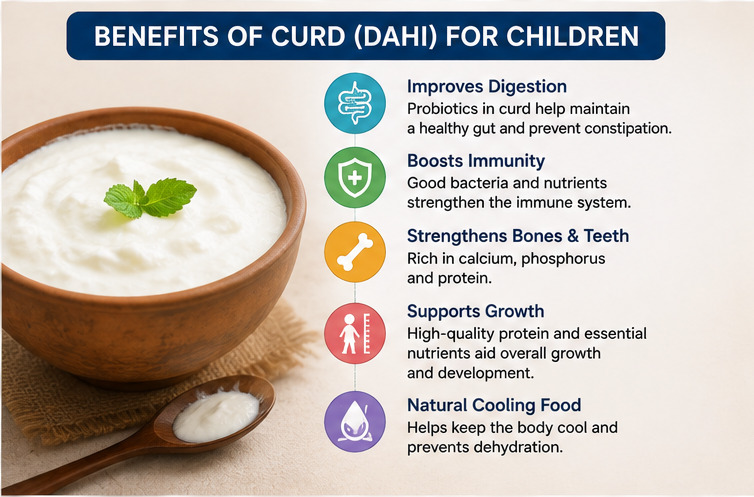
Curd gives children good-quality protein, calcium, iodine, riboflavin, and vitamin B12. Those are not decorative nutrients. Protein supports growth and repair; calcium and phosphorus help build bones and teeth; iodine supports thyroid function and brain development. Studies of children’s diets suggest that yogurt can make a meaningful contribution to calcium, magnesium, iodine, and riboflavin intake.
Then there are the live cultures. Fermentation breaks down some lactose, which is why many people with lactose maldigestion find curd easier on the tummy than milk. That does not mean curd is safe for a child with cow’s-milk protein allergy. Different problem. Different rules.
ती लहान पांढरी वाटी केवळ परंपरेपेक्षा अधिक काहीतरी सांगते.

दह्यामुळे मुलांना उत्तम दर्जाचे प्रथिने, कॅल्शियम, आयोडीन, रायबोफ्लेविन आणि व्हिटॅमिन बी१२ मिळतात. ही केवळ शोभेची पोषक तत्वे नाहीत. प्रथिने वाढ आणि दुरुस्तीसाठी मदत करतात; कॅल्शियम आणि फॉस्फरस हाडे व दात मजबूत करण्यास मदत करतात; आयोडीन थायरॉईडच्या कार्याला आणि मेंदूच्या विकासाला आधार देते. मुलांच्या आहारावरील अभ्यासातून असे दिसून येते की, कॅल्शियम, मॅग्नेशियम, आयोडीन आणि रायबोफ्लेविनच्या सेवनामध्ये दह्यामुळे महत्त्वपूर्ण योगदान मिळू शकते.

आणि मग येतात जिवंत जीवाणू. आंबवण्याच्या प्रक्रियेमुळे काही लॅक्टोजचे विघटन होते, म्हणूनच लॅक्टोज पचनाचा त्रास असलेल्या अनेक लोकांना दुधापेक्षा दही पचायला सोपे वाटते. याचा अर्थ असा नाही की गाईच्या दुधातील प्रथिनांची ऍलर्जी असलेल्या मुलासाठी दही सुरक्षित आहे. समस्या वेगळी, नियम वेगळे.
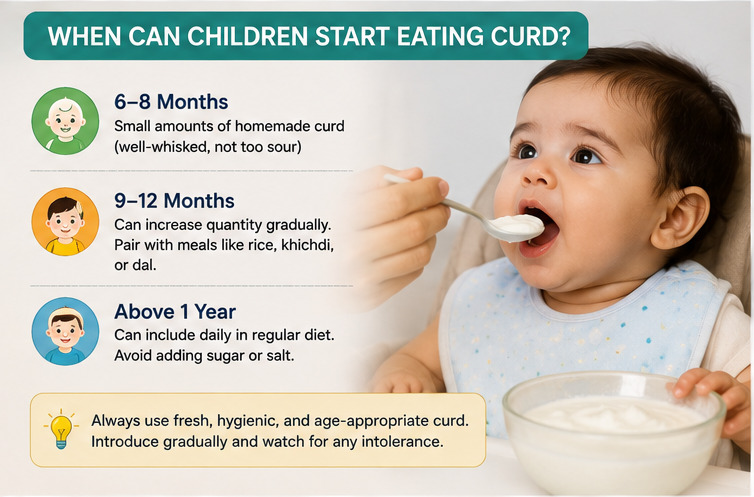
When should a baby start?
Not at four months because someone in the family says the baby looks “ready.” Not after one year because someone else says dairy must wait. The sensible middle road is around six months, once the baby is developmentally ready for complementary food: sitting with support, showing interest in food, and able to manage a thick puree or mash.
Start with one or two teaspoons of plain, unsweetened, full-fat curd. Offer it in the daytime, when you can observe your child, then increase gradually if all is well. Full-fat matters in the first two years because young children need energy and dietary fat for growth. A baby can have curd before they can drink cow’s milk as a main beverage. Plain cow’s milk should wait until 12 months because it is not nutritionally suitable as an infant’s main drink.
बाळाला वरचा आहार कधी सुरू करावा?

केवळ घरातील कोणीतरी म्हटलं की बाळ 'तयार' दिसतंय म्हणून चौथ्या महिन्यातच सुरुवात करू नका; किंवा दुग्धजन्य पदार्थ नंतर द्यावेत असं कोणीतरी म्हटलं म्हणून वर्षभर वाटही पाहू नका. यावरचा सुवर्णमध्य म्हणजे साधारण सहाव्या महिन्यात सुरुवात करणे—जेव्हा बाळ विकासाच्या दृष्टीने वरचा आहार घेण्यासाठी तयार असते. याची लक्षणे म्हणजे आधाराने बसता येणे, अन्नामध्ये रस दाखवणे आणि घट्ट प्युरी किंवा कुस्करलेले अन्न गिळता येणे.

साध्या, साखर न घातलेल्या आणि 'फुल-फॅट' (पूर्ण स्निग्धांश असलेल्या) दह्याच्या एक-दोन चमच्यांनी सुरुवात करा. हे दही दिवसा द्या जेणेकरून तुम्ही बाळाचे निरीक्षण करू शकाल; सर्व काही ठीक असल्यास हळूहळू प्रमाण वाढवा. सुरुवातीच्या दोन वर्षांत 'फुल-फॅट' दही देणे महत्त्वाचे असते, कारण लहान मुलांच्या वाढीसाठी ऊर्जा आणि आहारातील स्निग्धांशाची (फॅटची) गरज असते. मुख्य पेय म्हणून गाईचे दूध सुरू करण्यापूर्वी बाळ दही खाऊ शकते. गाईचे दूध थेट देण्याबाबत मात्र १२ महिने पूर्ण होईपर्यंत वाट पाहिली पाहिजे, कारण लहान बाळासाठी मुख्य पेय म्हणून ते पोषणमूल्यांच्या दृष्टीने योग्य नसते.
The curd bowl can go wrong quickly.
My strongest advice is this: skip flavoured cups, fruit yogurts, dessert yogurts, and any “kid-friendly” product with added sugar, syrups, colours, or sweeteners. A child does not need strawberry-flavoured sugar dressed up as nutrition. Plain dahi with mashed banana, stewed apple, seasonal fruit, or a little soft rice is enough.
Use pasteurised packaged curd or homemade curd made from milk that has been properly boiled first. Refrigerate it promptly, use clean utensils, and do not leave a bowl sitting around in Pune heat for hours. During monsoon, food handling becomes even less forgiving. If the curd smells unusually sour, appears watery with mould, or has been left out too long, throw it away. Your child does not need to win an argument with a questionable bowl of dahi.
दह्याची वाटी आरोग्यासाठी हानिकारक ठरू शकते, जर त्याकडे योग्य लक्ष दिले नाही तर.
माझा सर्वात महत्त्वाचा सल्ला हा आहे की: फ्लेवर्ड कप्स (वेगवेगळ्या चवीचे दही), फ्रूट योगर्ट्स, डेझर्ट योगर्ट्स आणि साखर, सिरप, रंग किंवा गोडवा आणणारे घटक (स्वीटनर्स) घातलेली 'मुलांसाठी खास' (kid-friendly) उत्पादने टाळा. पौष्टिकतेचा आव आणणाऱ्या स्ट्रॉबेरी-फ्लेवरच्या साखरेची मुलांना मुळीच गरज नसते. साध्या दह्यासोबत कुस्करलेले केळे, शिजवलेले सफरचंद, हंगामी फळे किंवा थोडा मऊ भात देणे पुरेसे असते.
पाश्चराइज्ड पॅकबंद दही किंवा आधी नीट उकळलेल्या दुधापासून घरी बनवलेले दहीच वापरा. ते त्वरित फ्रिजमध्ये ठेवा, स्वच्छ भांडी वापरा आणि पुण्याच्या उष्ण हवामानात दह्याची वाटी तासनतास बाहेर उघडी ठेवू नका. पावसाळ्यात तर अन्नाची हाताळणी करताना अधिक काळजी घेणे गरजेचे असते. जर दह्याचा वास असामान्यपणे आंबट येत असेल, ते पाण्यासारखे पातळ झाले असेल किंवा त्यावर बुरशी दिसली असेल, अथवा ते खूप वेळ बाहेर ठेवले गेले असेल, तर ते फेकून द्या. संशयास्पद दर्जाच्या दह्यासोबत तुमच्या मुलाने 'आग्रह धरून ते खाण्याचा' संघर्ष करण्याची काहीच गरज नाही.
A few simple do’s and don’ts
• Do choose plain, full-fat, pasteurised curd for babies and young children.
• Do begin with a small amount after six months and continue offering iron-rich foods such as dal, eggs, meat, legumes, and fortified cereals.
• Do serve curd cool or at room temperature according to your child’s comfort. Cold curd does not cause a cold, despite what every Indian family debate may suggest.
• Don’t add honey for babies under 12 months, and don’t add sugar, salt, chocolate powder, or packaged fruit syrup.
• Don’t use curd to replace breast milk or infant formula during the first year.
• Don’t assume that lactose intolerance and milk allergy are the same thing. They are not.
काही सोप्या गोष्टी - काय करावे आणि काय टाळावे

•	बाळांसाठी आणि लहान मुलांसाठी साधे, पूर्ण फॅट (full-fat) असलेले आणि पाश्चराइज्ड दही निवडा.
•	सहा महिन्यांनंतर थोड्या प्रमाणात दही देण्यास सुरुवात करा आणि त्यासोबतच डाळ, अंडी, मांस, कडधान्ये व 'फोर्टिफाइड' (पोषक तत्त्वे वाढवलेली) तृणधान्ये यांसारखे लोहयुक्त (iron-rich) पदार्थ देणे सुरू ठेवा.
•	मुलाला ज्या तापमानाला दही खायला आवडेल किंवा सोयीचे वाटेल, त्यानुसार ते थंड किंवा सामान्य तापमानाला (room temperature) द्या. भारतीय कुटुंबांमध्ये यावरून कितीही चर्चा किंवा वाद होत असले, तरी थंड दही खाल्ल्याने सर्दी होत नाही.
•	१२ महिन्यांपेक्षा कमी वयाच्या बाळांना दही देताना त्यात मध घालू नका; तसेच साखर, मीठ, चॉकलेट पावडर किंवा पॅकबंद फ्रूट सिरपही घालू नका.
•	पहिल्या वर्षात आईचे दूध किंवा 'इन्फंट फॉर्म्युला' (बाळांचे दूध) यांच्या ऐवजी दही देऊ नका.
•	'लॅक्टोज इनटॉलरन्स' (lactose intolerance) आणि दुधाची ॲलर्जी (milk allergy) या दोन्ही गोष्टी एकच आहेत, असे समजू नका. त्या पूर्णपणे वेगळ्या आहेत.
Dahi can remain what it has always been in Maharashtrian homes: a simple, affordable, nourishing food. This Janmashtami, let the handi be festive. Let the child’s bowl be plain, fresh, safe, and happily finished.
महाराष्ट्रीयन घरांमध्ये दही जसे नेहमीच राहिले आहे, तसेच ते राहू शकते: एक साधे, परवडणारे आणि पौष्टिक अन्न. या जन्माष्टमीला 'हंडी' उत्सवाचा आनंद देणारी असू द्या; पण मुलाच्या वाटीतील दही मात्र साधे, ताजे व सुरक्षित असावे आणि ते आनंदाने फस्त केले जावे.
Wish you and your family a very Happy Janmashtami.
तुम्हाला आणि तुमच्या परिवाराला जन्माष्टमीच्या खूप खूप शुभेच्छा.
About the Author
Dr. Suhas Sodal, MBBS, MD (Pediatrics), brings over 15 years of experience caring for children in Pimple Gurav, Pimpri, and surrounding areas.
He specializes in pediatric infectious diseases, childhood allergies and asthma, vaccines, and nutrition.
Dr. Sodal has led multiple clinical trials on vaccine safety and efficacy, ensuring evidence-based care.
His passion for pediatric nutrition drives innovative, child-friendly dietary guidance rooted in Indian traditions.
Families in Pimple Gurav, Pimple Saudagar, Rahatani, Wakad, Aundh, Dapodi, Sangvi, Bhosari, Pimpri, and Vallabh Nagar trust his expertise.
He practices at IRA Children’s Clinic in Pimple Gurav, offering personalized treatment plans for every child.
Dr. Sodal’s holistic approach blends modern medicine with practical nutritional advice for optimal growth.
His clinic is known for compassionate care, helping children thrive through preventive and curative services.
Parents seeking reliable pediatric advice can reach IRA Children’s Clinic at 7276012600.
Dr. Sodal remains dedicated to advancing child health and wellness in the Pune region.
लेखकाबद्दल

डॉ. सुहास सोडल, एमबीबीएस, एमडी (बालरोगशास्त्र) यांना पिंपळे गुरव, पिंपरी आणि आसपासच्या परिसरातील मुलांची काळजी घेण्याचा १५ वर्षांहून अधिक अनुभव आहे.
ते बालरोग संसर्गजन्य रोग, बालपणीच्या ऍलर्जी आणि दमा, लस आणि पोषण या विषयांमध्ये तज्ज्ञ आहेत.
डॉ. सोडल यांनी लसीची सुरक्षितता आणि परिणामकारकता यावर अनेक क्लिनिकल चाचण्यांचे नेतृत्व केले आहे, ज्यामुळे पुराव्यावर आधारित काळजी सुनिश्चित होते.
बालरोग पोषणाबद्दलची त्यांची आवड भारतीय परंपरांमध्ये रुजलेली नाविन्यपूर्ण, बाल-अनुकूल आहार मार्गदर्शन करते.
पिंपळे गुरव, पिंपळे सौदागर, रहाटणी, वाकड, औंध, दापोडी, सांगवी, भोसरी, पिंपरी आणि वल्लभ नगरमधील कुटुंबे त्यांच्या कौशल्यावर विश्वास ठेवतात.
ते पिंपळे गुरव येथील इरा चिल्ड्रन्स क्लिनिकमध्ये प्रॅक्टिस करतात, प्रत्येक मुलासाठी वैयक्तिकृत उपचार योजना देतात.
डॉ. सोडल यांचा समग्र दृष्टिकोन आधुनिक औषधांना इष्टतम वाढीसाठी व्यावहारिक पौष्टिक सल्ल्यासह एकत्रित करतो.
त्यांचे क्लिनिक दयाळू काळजीसाठी ओळखले जाते, प्रतिबंधात्मक आणि उपचारात्मक सेवांद्वारे मुलांना भरभराट करण्यास मदत करते.
विश्वसनीय बालरोग सल्ला मिळवणाऱ्या पालकांना इरा चिल्ड्रन्स क्लिनिकशी ७२७६०१२६०० या क्रमांकावर संपर्क साधता येईल.
डॉ. सोडल पुणे प्रदेशात बाल आरोग्य आणि निरोगीपणा वाढवण्यासाठी समर्पित आहेत.
Disclaimer:
काळजीपूर्वक लक्षात घ्या:





Leave a comment